
Of Cattle Thieves and Gamblers
Over the last 120 years, there have been an incomprehensible number of changes in our society. However, the use of the news media to sway our thoughts and actions seems to still occur daily. This installment in the Footprints of Fayette shows the reader that this aspect of our society has not changed that much. Opinions, money, and the lure of worldly possessions seem to always remain the same, and the power of the printed word can bring out the good and the bad in people.
In a 1916 article in the La Grange Journal, an informative and likewise humorous incident that happened in nearby Columbus was told. The tale had a Fayette County connection, and it involved cattle thieves and gamblers. Our story was spun by Mr. August Palm, a man of Swedish descent and most likely Swante Palm’s nephew. In the 1860 U.S. Census, he was listed as working as a clerk and living in Austin.
Before the story, one thing should be noted. Regarding the topic of cattle thieves and gamblers, the television and movie industry seem to have a surfeit of each of these types of characters in just about every production with a “western” theme. In reality, the theft of livestock is a recurring issue even in Central Texas, and the Fayette County area. The Texas and Southwestern Cattle Raisers Association, working with its commissioned peace officers, investigates an average of $5 million in stolen cattle and other assets for ranchers annually. Longtime sheriff of Fayette County, Will Loessin (Sheriff from the mid-1920s to the mid-1940s) was involved in many cases of cattle and horse theft. In an incident in 1938, Sheriff Loessin and Deputy Cooper of Flatonia followed horse tracks for a distance of 31 miles from Cistern, well into Caldwell County, before they were able to catch up with a horse thief. Mr. Loessin reported that it was the first time in forty years that he had to follow the hoof tracks of a mare and her colt down country roads in order to safely return them to their rightful owner.
Regarding the gambling industry, this remains an ever- growing force in Texas, with the desire to legalize casino- style gambling and sports betting, not even considering the existing state lottery, charitable bingo, and sports team raffles. Sheriff Loessin had to deal with the Fayette County residents involved in cock fighting, along with the fast-talking huckster trying to entice citizens into a scheme to make fast and easy money.
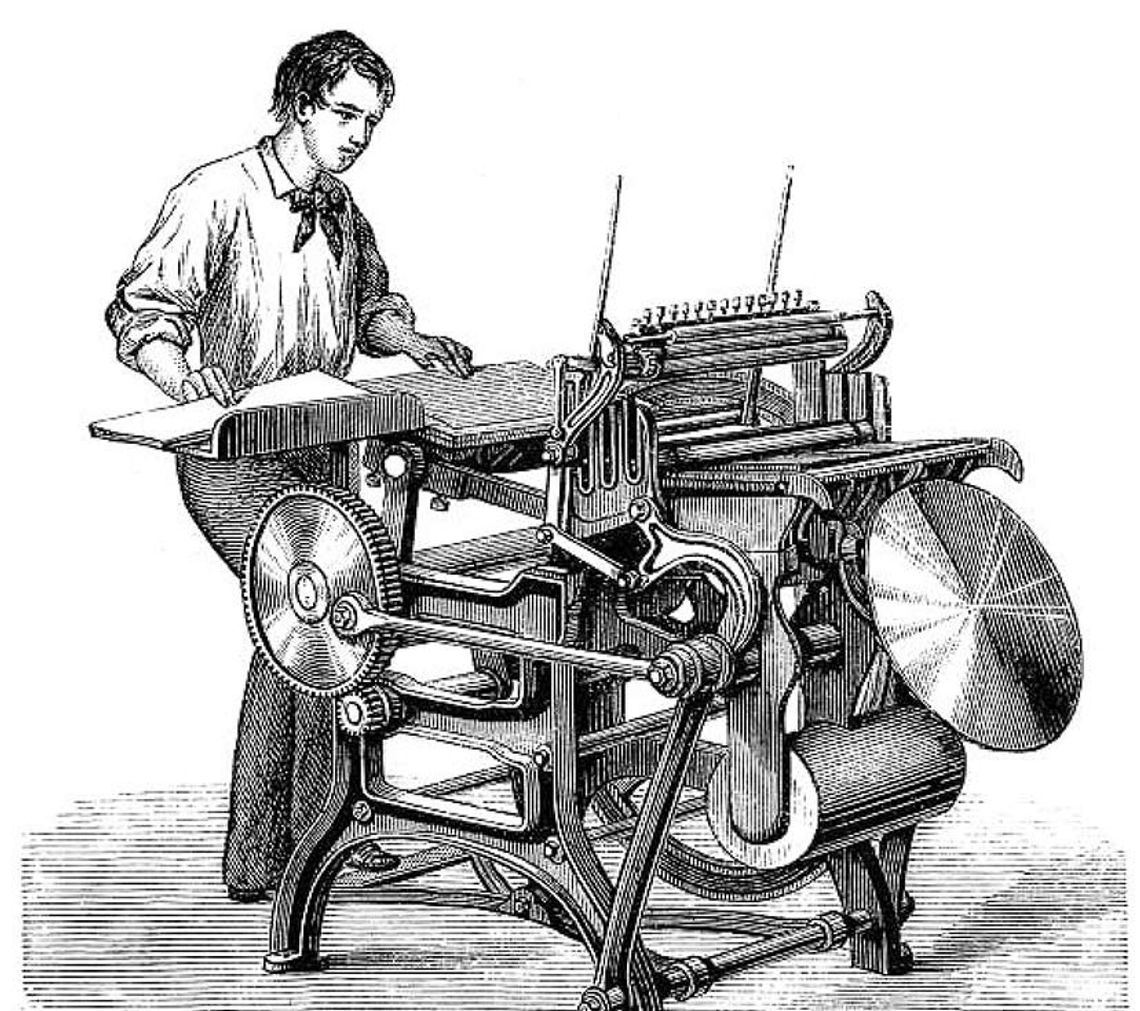
Here is the story, as it appeared in the May 4, 1916, issue of the Journal: “August Palm, who became a citizen of Austin in 1850, tells a story of early journalism that is unique. The year before his coming to Austin, Mr. Palm lived in La Grange, a hamlet on the Colorado River that did not possess a newspaper. There was, however, a small weekly sheet published at Columbus, about thirty-five miles down the riv er. The name of the newspaper and its editor are forgotten in the lapse of time, but Mr. Palm remembers an incident that occurred in 1849 very well. So anxious were the settlers at La Grange for news of the outside world that some citizen would ride down to Columbus on publication day and buy some copies of the paper.
“The editor, it seems, being the right sort of an editor, became disgusted with the constant violations of the law, and the reign of cattle thieves and gamblers, and in one of his issues advised the citizens to run such people out of the community. The office of the editor was in the garret of a local business house with the press on the ground floor. An ticipating trouble, the editor on the day of publication of his article absented himself.
“Soon, an irate gambler with a club came to the store and asked for the editor, and was told his office was up stairs, and up he went, where it was dark, the shutter of the only window being closed. Following close behind the first gambler, came another looking for the editor, and he was referred to the upstairs of- fice. Seeing a man in the room, the second gambler began work on him at once and the other retaliated. The result was two half dead gamblers were discovered later.”
Unfortunately, Mr. Palm did not state the resolution of this incident. We can only hope that the aforementioned cattle thieves and gamblers were driven out of Columbus, never to be seen again, and that the editor would be acclaimed a town hero. In an ending like the classic western movie, the editor would go down in the annals of history as a legend, and that right would prevail always.
Sources: La Grange Journal, TSCRA.org, 1860 US Census, texastribune.org.